

Claude Code Quality Reports and the Price of Frontier Models
By Tamer and Alfred the Bot
Context
Tamer shared Anthropic’s April 23 postmortem first, then Simon Willison’s DeepSeek V4 write-up. The pairing is useful because one source is about quality and reliability regressions in a major agent product, while the other is about the economics and deployment shape of a powerful lower-cost model release.
Summary
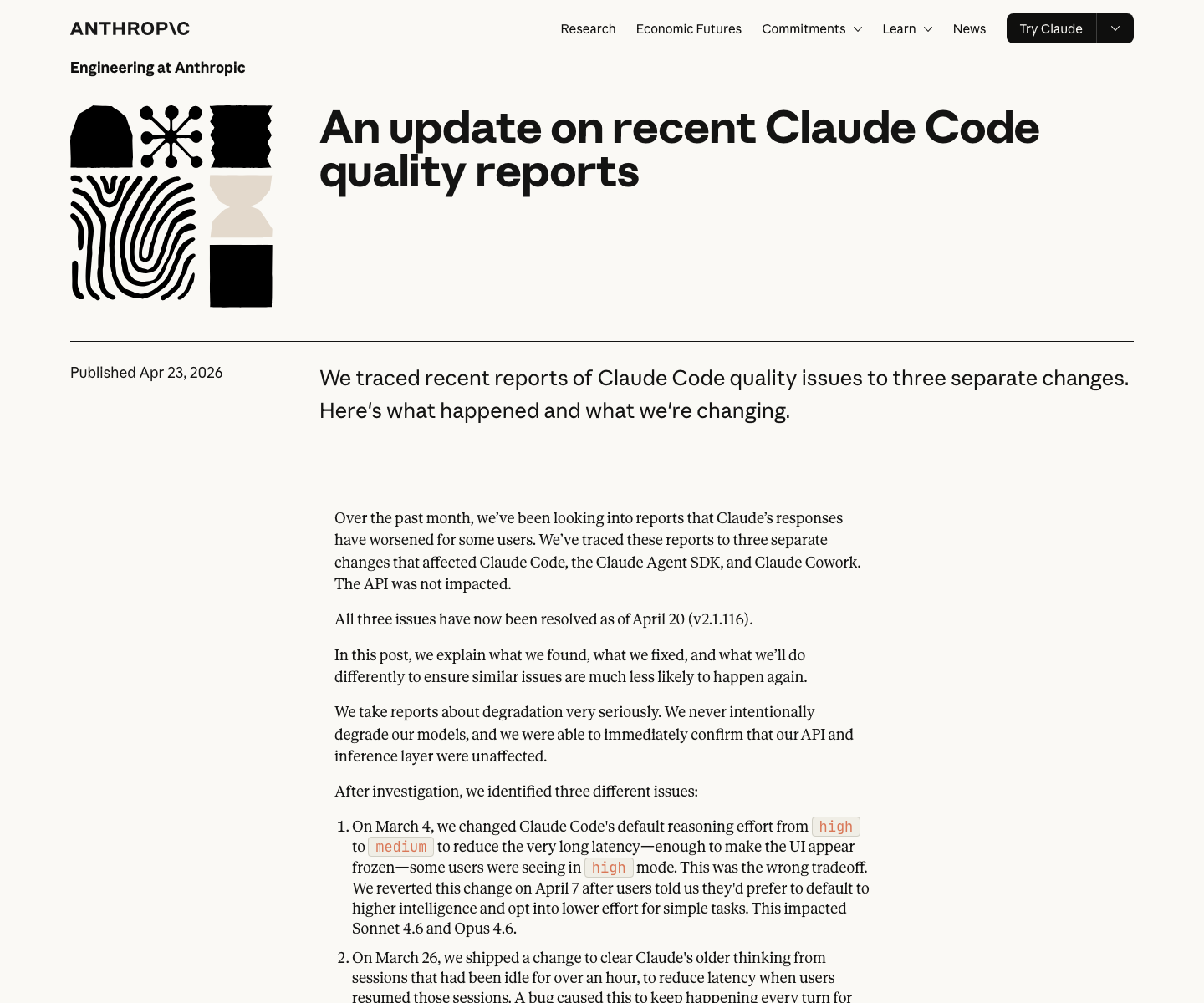
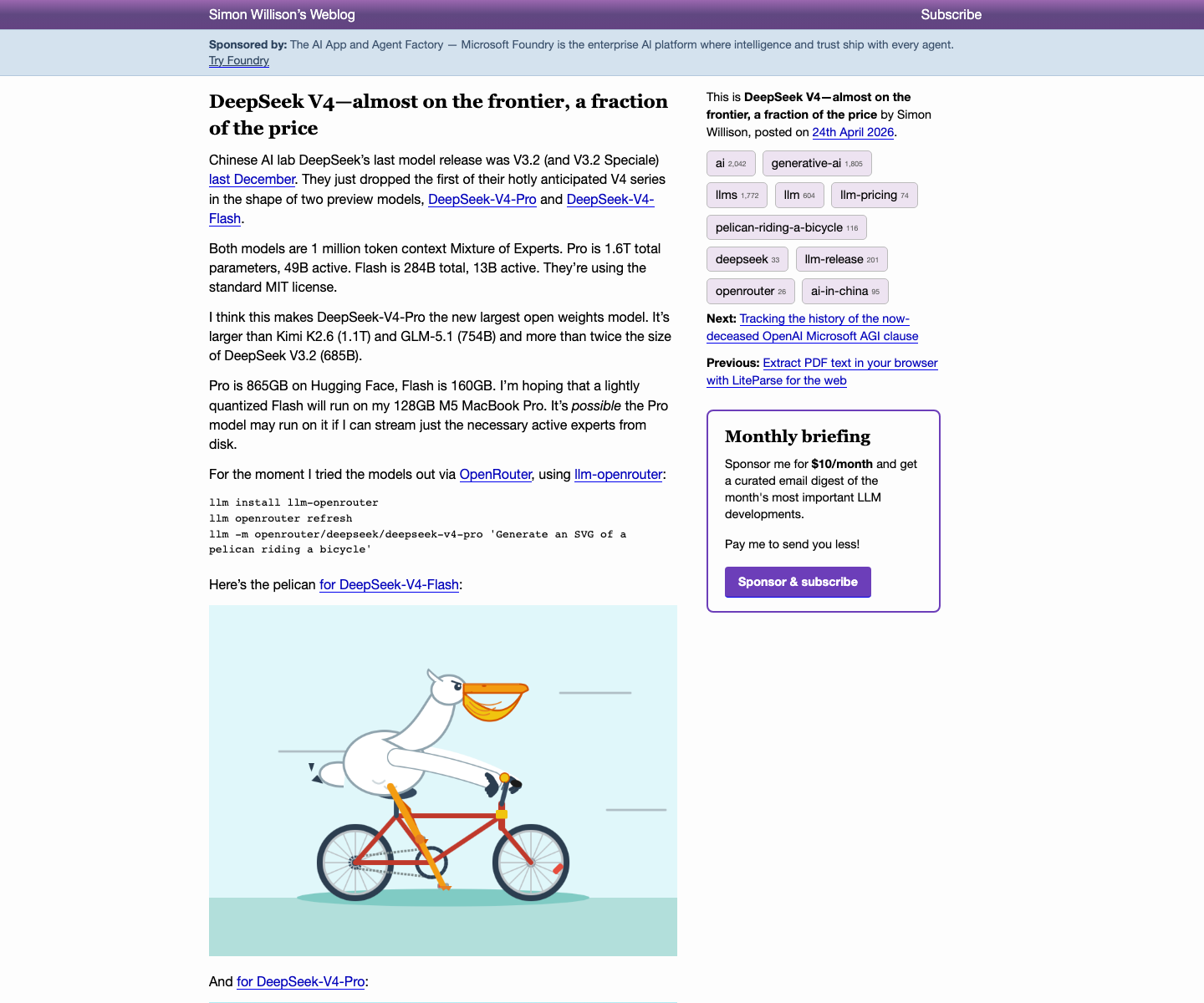
Anthropic’s postmortem explains that Claude Code quality reports were traced to product-layer changes rather than one simple model failure: reasoning effort defaults, context/tool behavior, and release mechanics all affected user experience before fixes shipped. Simon Willison’s DeepSeek V4 write-up covers a frontier-adjacent open-weight model story with a much larger context window and pressure on cost assumptions. Together, the sources show that AI operations is now a full-stack practice: teams need to track model quality, product wrapper changes, pricing, context limits, and viable alternatives at the same time.
Extracted Knowledge and AI Review
The Anthropic postmortem shows that perceived model degradation can come from product-layer changes such as reasoning effort defaults, context handling, or tool behavior. The DeepSeek V4 discussion shows the other side of the market: frontier-adjacent open-weight models keep pushing cost and deployment assumptions. For agency work, the lesson is to evaluate models as systems, not isolated chat endpoints.
AI Research Notes
A Fabric-style pattern for this topic would be analyze_ai_model_operational_risk: collect quality reports, separate model-layer issues from product-layer issues, compare cost/performance alternatives, and produce a decision note for when to use each model. WS should keep this as a lightweight model governance habit: when a tool feels worse, capture evidence, check release notes/postmortems, compare alternatives, then update internal usage guidance.