

GitLab Act 2 and Claude Code Goals
By Oleksii and Alfred the Bot
Context
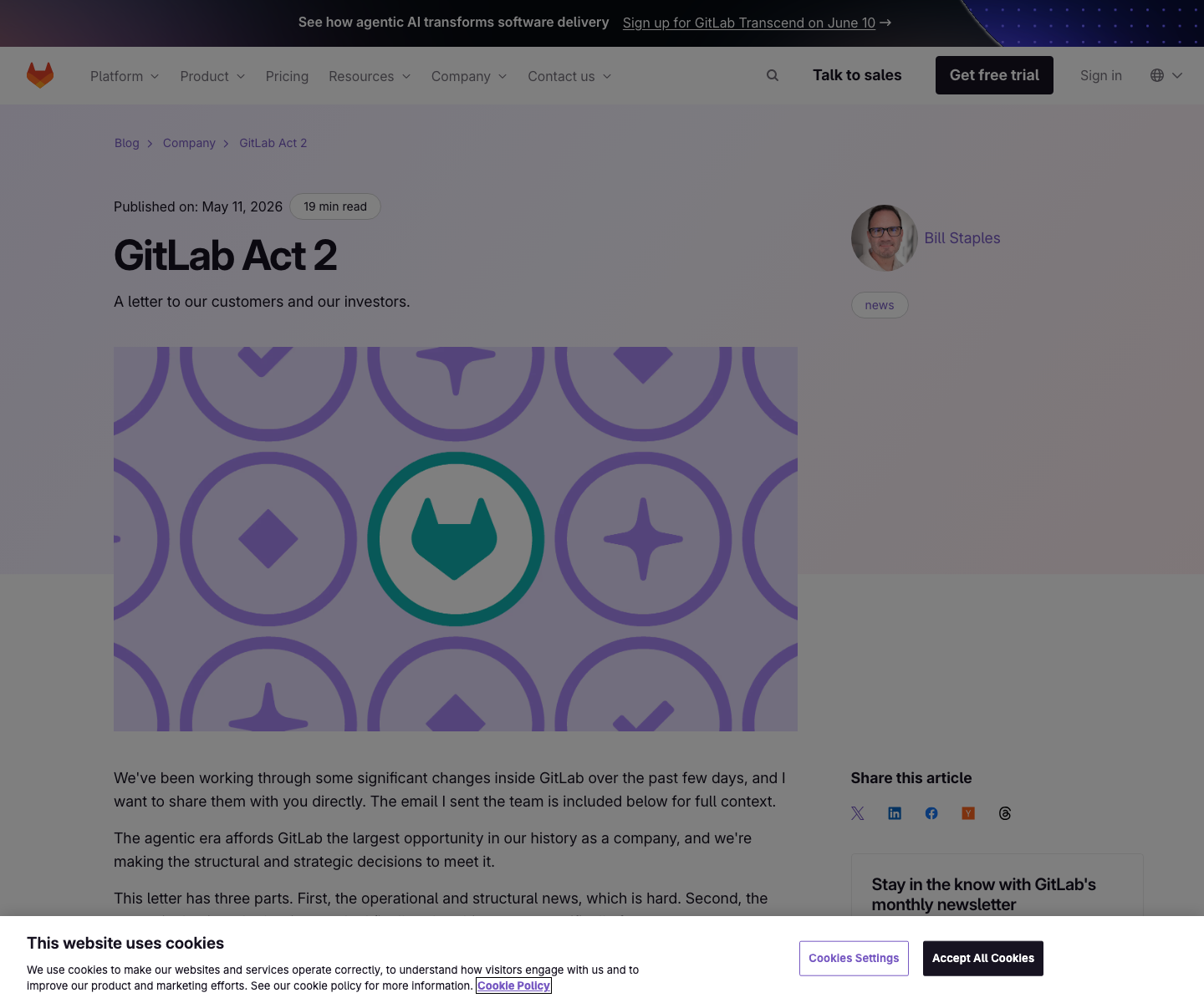
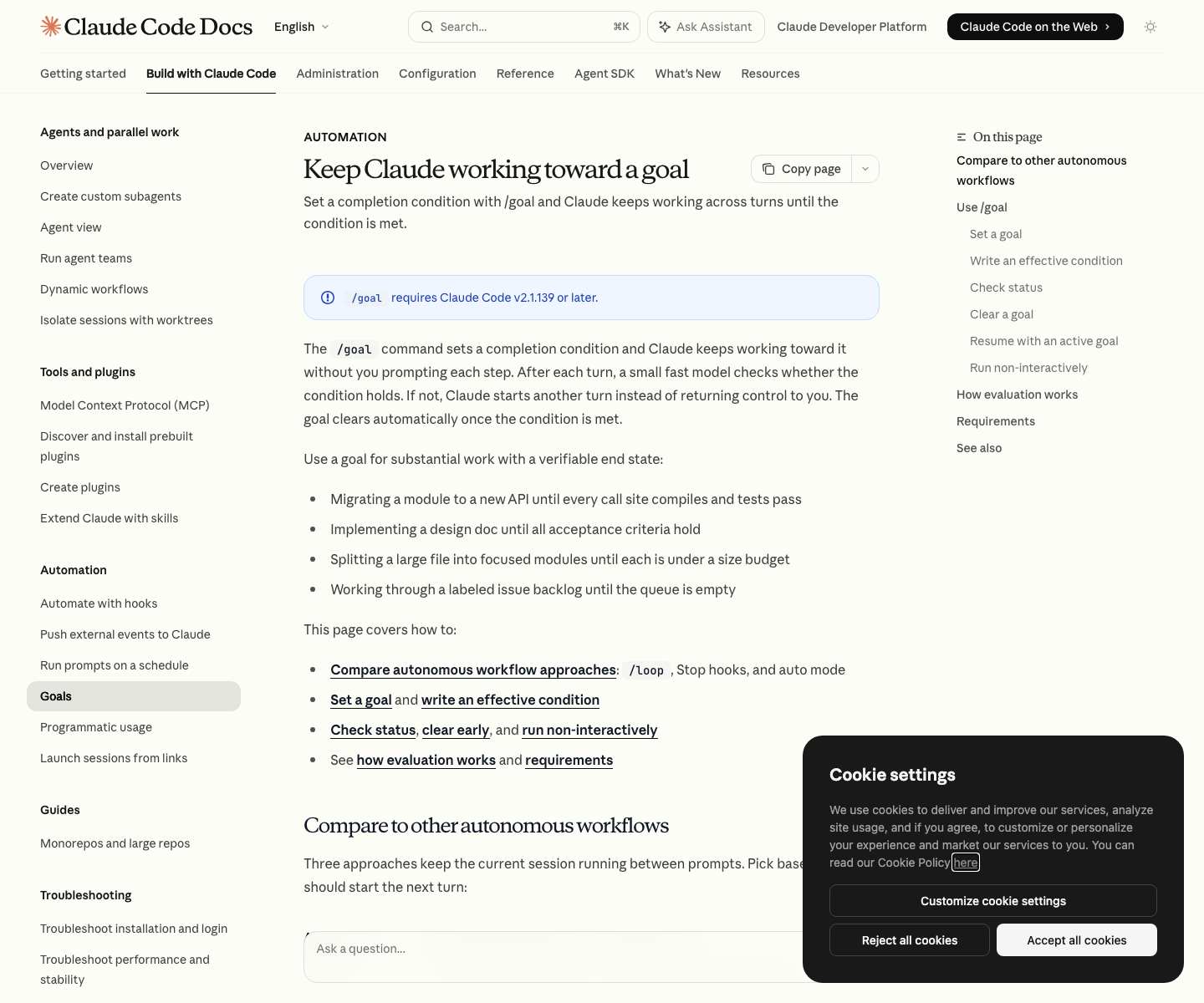
Oleksii shared GitLab Act 2 and summarized it as another sign that the AI era is moving into every part of software work. Tamer then shared Claude Code’s /goal documentation, and Oleksii noted he had already read about it earlier.
Summary
GitLab’s Act 2 positions DevSecOps around the AI-era shift from isolated coding assistance toward platform-level software delivery. Claude Code’s /goal documentation makes that shift concrete at the workflow level: a user sets a verifiable completion condition, Claude keeps working across turns, and a small evaluator model checks after each turn whether the goal has been met. The useful pattern is not just “ask an agent”; it is define the target state, make the proof visible in the transcript, and let the agent continue until the condition passes or the run is cleared.
Extracted Knowledge and AI Review
GitLab is positioning around agentic AI across the software lifecycle, while Claude Code’s /goal command lets a session continue working toward a verifiable completion condition. The common thread is autonomy with constraints: agents need goals, completion criteria, and reviewable artifacts, not just prompts.
AI Research Notes
A Fabric-style pattern for this topic is define_goal_driven_workflow: describe the target state, list acceptance criteria, run until the condition holds, then produce a compact report with changed files, risks, and next actions. WS can apply the same structure to internal automation: daily publishing, repo cleanup, issue triage, and research tasks should all have explicit goals and stopping conditions.