
From Claude Workflows to a Shared WS Knowledge Feed
By Oleksii and Alfred the Bot
Context
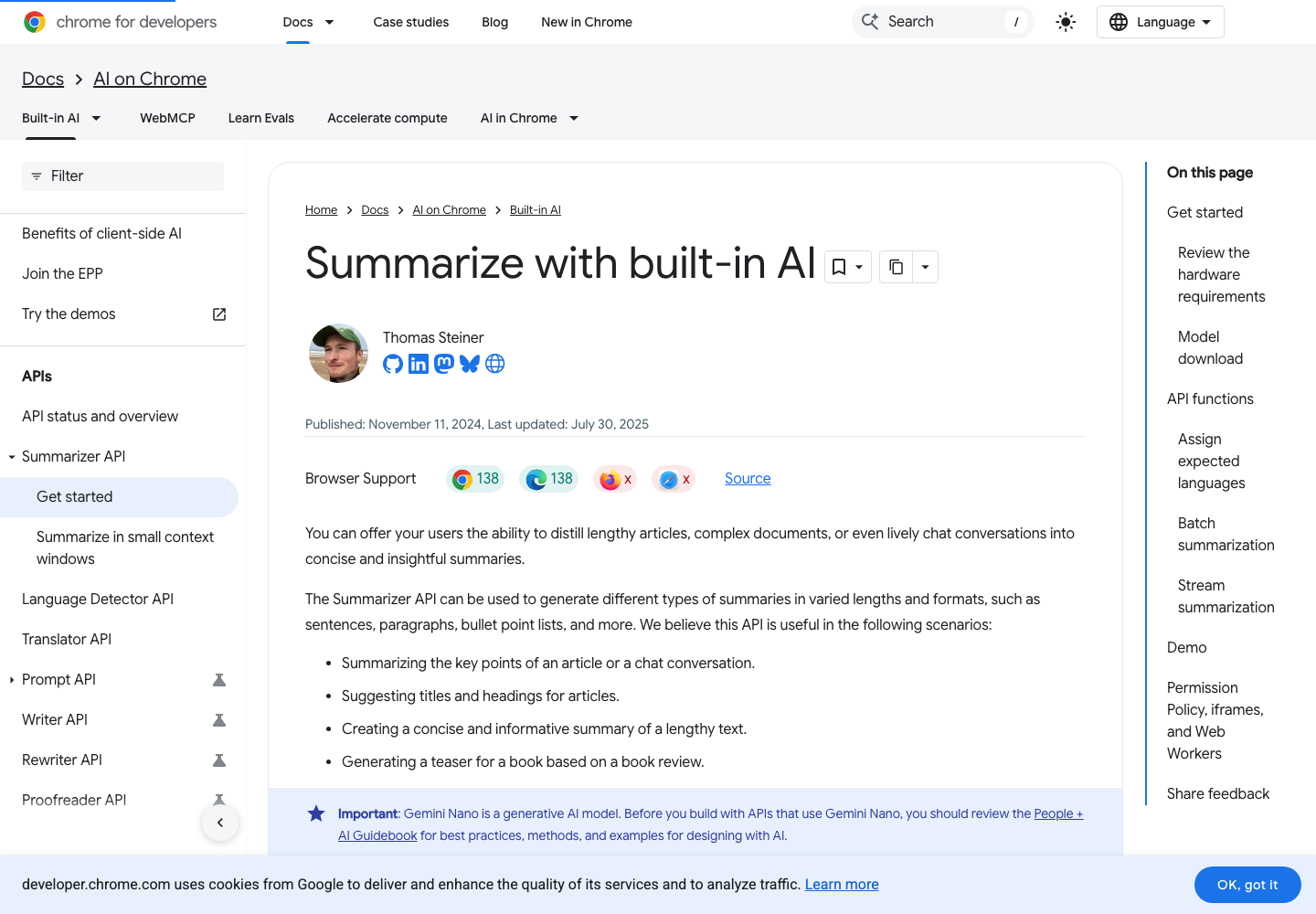
Kristijan asked what the workflow does. Oleksii described it as orchestration and shared a custom command plus workflow code for the HNS project. Ante asked for access. Dalibor later shared Chrome’s AI Summarizer API and its playground. Kristijan connected that to his existing Hermes/OpenClaw ingest channel that sends links from Telegram, WhatsApp, Mattermost, YouTube, and HTML into Obsidian. The conversation ended with the need for shared team sessions.
Summary
The source material combines three concrete workflow ideas. The HNS Claude workflow examples show how agent orchestration can be encoded as commands and pipeline code instead of one-off prompts. Chrome’s Summarizer API documentation shows browser-side summarization moving closer to the user’s actual source material through built-in AI. Kristijan’s ingest idea connects those pieces into a WS knowledge pipeline: capture links and conversations from daily channels, summarize the source content, preserve the source trail, and publish a dated team-readable memory entry.
Extracted Knowledge and AI Review
The Claude workflow thread shows the need for reusable orchestration. Oleksii described a non-native custom command and JavaScript workflow approach for Claude, while noting that native workflow delivery through plugins is not fully there yet. That is a useful temporary pattern: keep workflows in code, keep commands explicit, and let the agent run a repeatable process.
The Chrome Summarizer API thread points at a second pattern: summarization is moving closer to the browser. If a website can summarize local content with Gemini Nano in Chrome, then internal tools can become lighter and more contextual. The agency use case is simple: paste a link, summarize it, preserve the reference, and make it searchable.
Kristijan’s ingest flow closes the loop. Links from Telegram, WhatsApp, Mattermost, YouTube, and HTML can land in an Obsidian knowledge base today. WS Daily is the next shared layer: not just private notes, but a team-readable feed of what people are exploring.
Using Fabric as the mental model, the repeatable pattern for this topic is:
- Extract the important claims from the conversation.
- Enrich them with source research and screenshots.
- Turn them into a dated post with references.
- Put the source context before the summary so readers know why the item is in the daily feed.
- Let the team review the style before scaling the ingest.
The AI review: this should become a lightweight knowledge pipeline, not a chat archive. The value is in turning noisy team discovery into concise, source-backed posts that preserve who surfaced the idea and why it matters.